BrainBuzz
____Cognitive Training Through Gamification
Designed a gamified cognitive training app, focused on building consistent practice through short games, social challenges, and visible progress.
Role
Company
Timeline
Team
Product
Senior UX Designer
MindKick Inc.
2016-2017
PM
UX Designer
Engineer
Consumer Mobile App Mobile
Cognitive Training
BrainBuzz is an application designed to help users strengthen core cognitive skills—such as memory, attention, and processing speed—through short, game-based exercises. The project focused on applying principles from habit formation, learning science, and motivation theory to address a well-documented challenge in the cognitive training space: sustaining engagement over time.
Rather than treating cognitive improvement as a passive or isolated activity, BrainBuzz reframes it as a daily, socially reinforced practice. The experience is supported by progression systems, challenges, and frequent feedback that make effort visible and rewarding. The goal was to design a system that encourages regular use, since consistent practice is a prerequisite for any measurable cognitive benefit.
Despite strong interest in cognitive training products, most users fail to engage consistently enough to experience meaningful benefits.Research and market analysis identify several recurring issues in existing cognitive training applications:
1____Cognitive benefits are delayed and difficult to perceive [1, 2]
2____Training experiences feel repetitive and isolating [3, 4]
3____Motivation declines without visible progress [5]
4____Extrinsic rewards are often misapplied, fail when not aligned with intrinsic motivation and skill mastery. [6, 7]
5____Lack of social accountability reduces adherence [8, 9]
Problem
Key Research Insights
Research across cognitive psychology, learning science, and gamification revealed consistent patterns relevant to this problem space:
1____Cognitive improvement depends on repeated practice
Skill development relies on distributed, consistent engagement rather than sporadic or intensive use. [1, 2]
2____Feedback and progress visibility sustain motivation
Clear, timely feedback increases perceived competence and supports continued effort in learning tasks. [5, 10]
3____Gamification works only when supporting intrinsic motivation
Game elements are most effective when reinforcing autonomy, competence, and social relatedness rather than acting as superficial rewards. [6, 7]
4____Social interaction increases persistence
Peer comparison, competition, and shared goals improve adherence and time-on-task in learning environments. [8, 9]
5____Short, varied activities reduce fatigue
Bite-sized tasks improve engagement and retention compared to long, repetitive sessions. [3, 11]
Design a cognitive training experience that:
1____Encourages regular, repeat use
2____Makes effort and progress visible early and often
3____Uses gamification to reinforce learning rather than distract from it
4____Builds social accountability and motivation
5____Balances challenge and reward to support long-term engagement
Success was defined not by single-session completion, but by users returning consistently and participating in challenges over time.
Goal
1____Design for habit formation
Prioritize repeat engagement over novelty or feature breadth. [1]
2____Make progress legible
Ensure users can clearly see effort, improvement, and achievement. [5]
3____Support intrinsic motivation
Use game mechanics to reinforce mastery, autonomy, and social connection. [6]
4____Lower the barrier to participation
Keep sessions short and easy to start. [3]
5____Acknowledge effort, not just outcomes
Celebrate participation and consistency to sustain motivation. [10]
Design Principles
Solution - Key Design Decisions
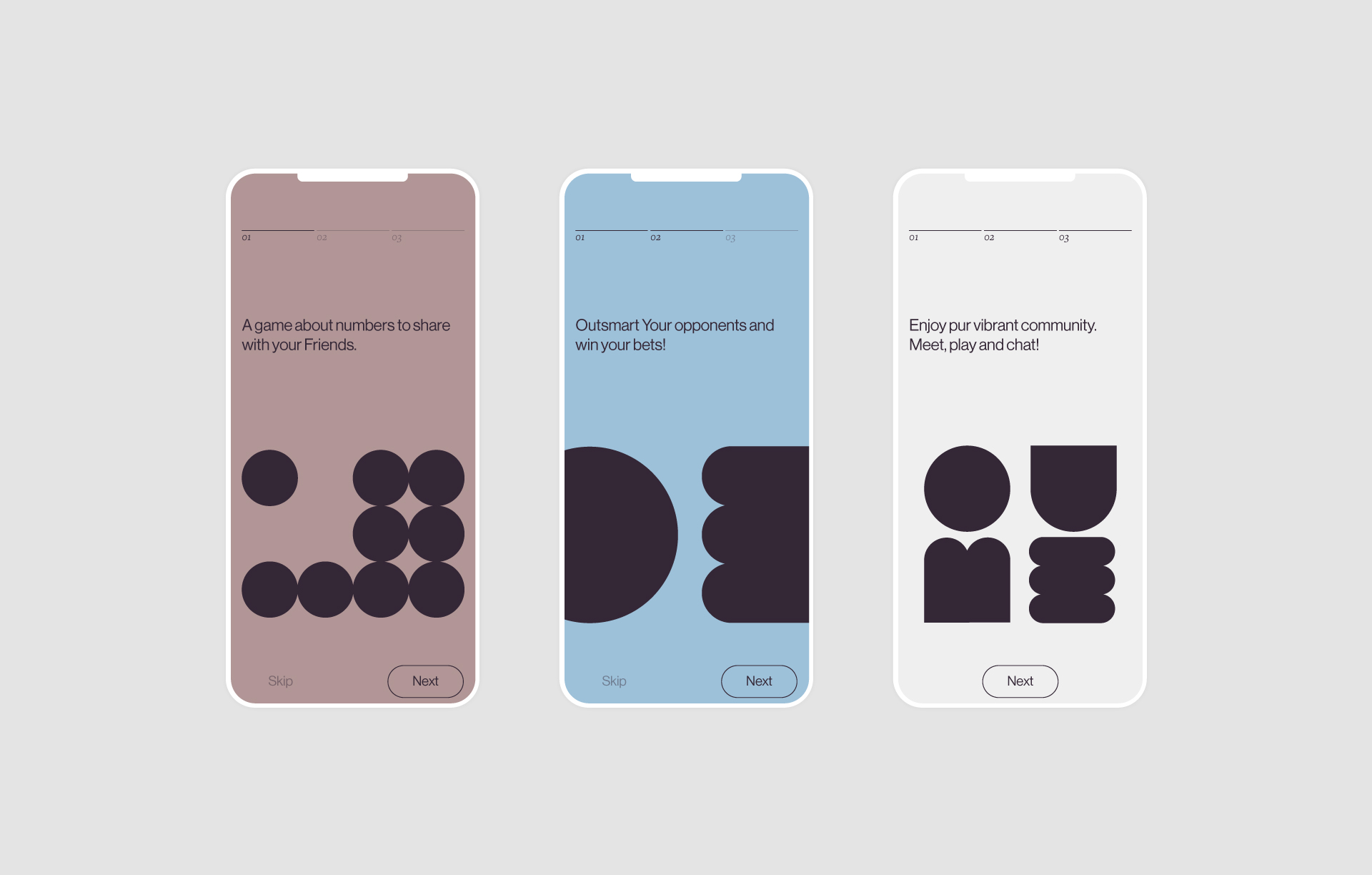
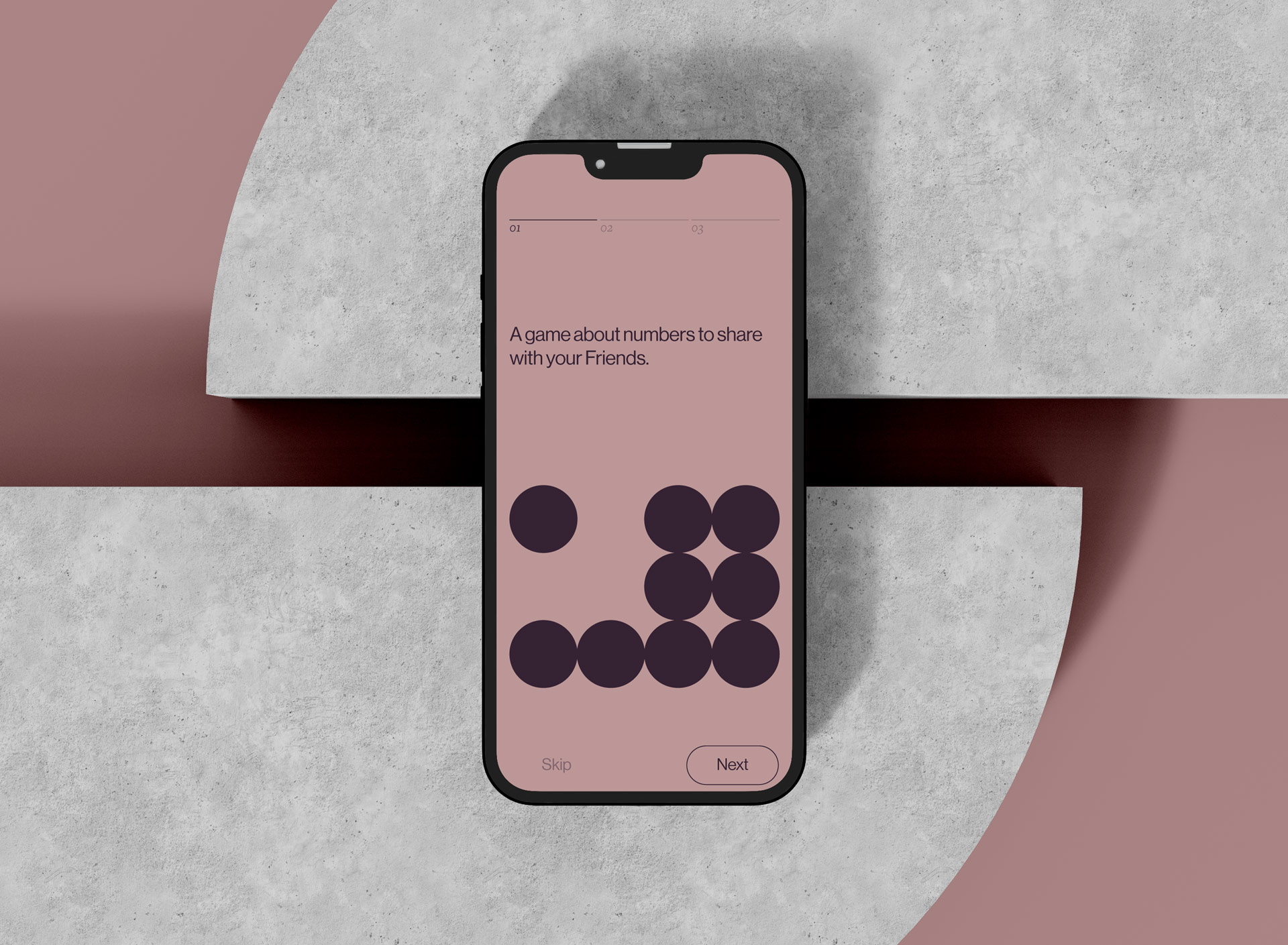
Onboarding____Guided Entry Through Personalization and Social Commitment
Reduce early friction while establishing relevance and social accountability from the first session.
A lightweight onboarding flow:
1____Select cognitive interests
2____Choose preferred game types
3____Send the first challenge to someone in the community
Why
Early onboarding decisions strongly influence whether users return after the first session. Personalization helps users quickly understand how the experience applies to them, while initiating a social action creates a sense of commitment beyond individual intent.[6,8]
Benchmarks
1____Early personalization improves perceived relevance and initial engagement by helping users immediately contextualize the experience. ~10–20% higher initial engagement and task completion in learning and self-improvement systems.[5]
2____Introducing social commitment early increases follow-through
(~15–35%) by leveraging accountability and shared expectations. [8, 9]
3____Reducing early cognitive load improves activation and short-term retention (~10–25%) in learning and habit-forming applications by minimizing decision fatigue and allowing users to experience value quickly. [3, 11]
Dashboard____Action-Oriented Entry Point
Make the dashboard a clear entry point that reinforces continuity, highlights available challenges, and reduces friction to starting the next activity.
1____Weekly streak, time spent, and encouraging message
2____Daily challenge (optional participation)
3____Active 1:1 matches (your turn)
4____Community overview (active users, new users, friends)
Persistent Level, Points and Coins indicator in Top navigation section.
Why
Placing progress indicators first provides immediate feedback and reassurance, while surfacing clear opportunities for action reduces deliberation at the moment of entry. Persistent indicators reinforce continuity.
Benchmarks
1____Visible progress summaries increase short-term return rates by ~10–25 pp, particularly during the first 7–14 days of use[5, 10]
2____Surfacing clear next actions reduces cognitive effort and increases task completion by ~20–40%. [5, 10]
3____Persistent progress indicators increase perceived investment and long-term engagement by~10–20%. [6, 7]
Game Elements____Sustaining Motivation Through Progression
Support long-term engagement through structured progression rather than novelty-driven rewards.
1____Internal Currency
Coins earned through games and challenges, redeemable for in-game advantages.
Why
Flexible internal reward systems increase engagement when tied to effort and choice rather than obligation. ~10–15% increases in persistence and task completion [6, 7]
2____Points
Awarded for participation and performance.
Why
Quantitative feedback mechanisms such as points are linked to ~10–15% increases in persistence and task completion, especially when progress is transparent and cumulative. [5, 7]
3____Levels — Adaptive Difficulty
Difficulty increases as users progress; new levels unlock through consistent activity.
Why
Adaptive difficulty helps maintain engagement by keeping tasks challenging but achievable. ~15–30% improvements in sustained participation when difficulty adapts over time [3, 10]
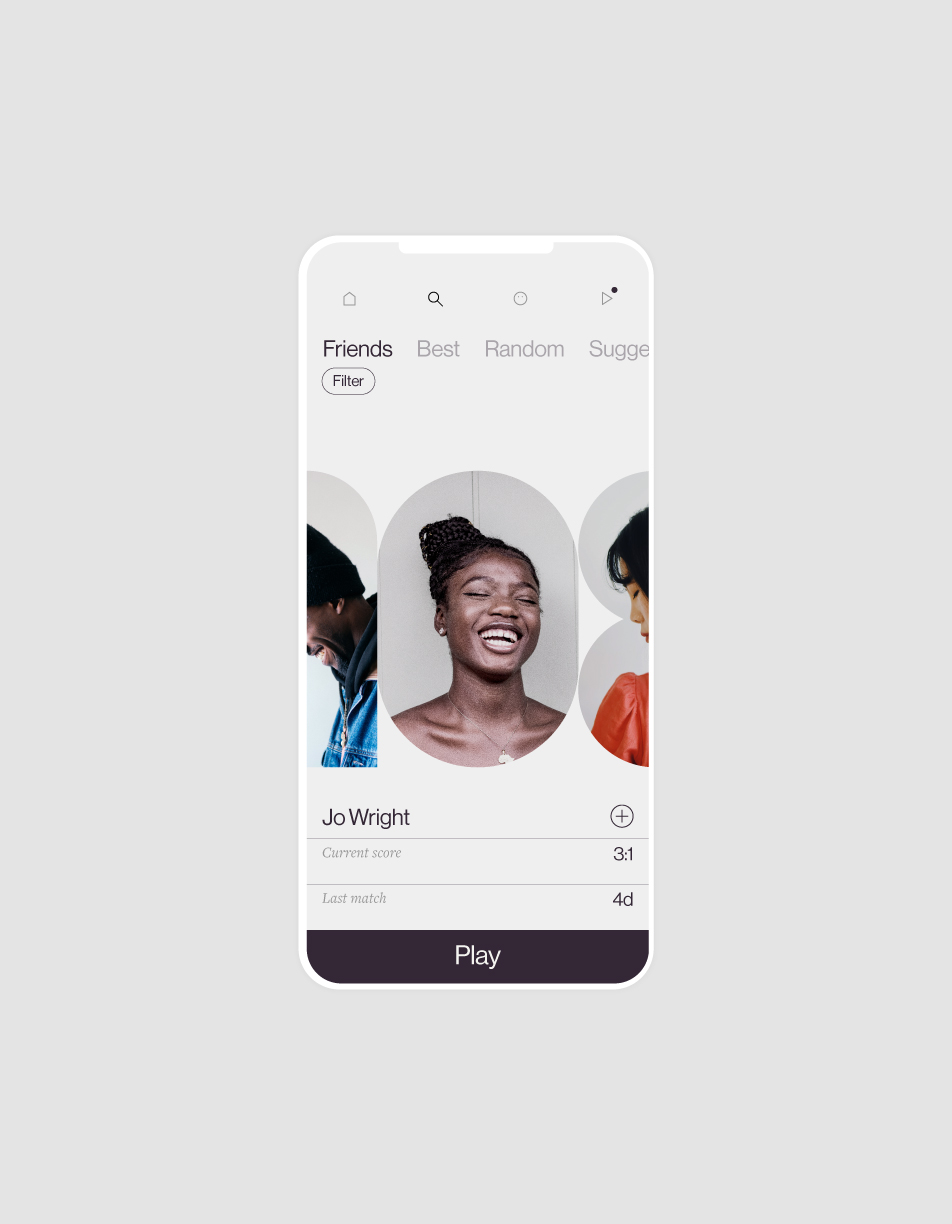
Leaderboards — Social Progress
Use social comparison to motivate continued participation while keeping progression attainable and non-punitive across skill levels.
1____Information what is required to progress to the next level
2____CTA-possibility to quicken progress
3____Leaderboard with player profiles and challenge options
Why
Leaderboards leverage social comparison to motivate improvement, but framing progress as relative and attainable reduces discouragement. [8, 9]
Benchmarks
1____Progress-based leaderboards increase motivation more effectively than absolute rankings.Associated with ~10–25% higher participation rates across broader user cohorts. [8]
2____Achievable social comparison improves effort and persistence. [9]
Statistics Screen — Recognizing All Wins
Reinforce effort and consistency beyond competitive outcomes.
1____Overall progress summary
2____Cumulative stats (time spent, games played, challenges sent)
Why
Long-term engagement is supported when users can see the full scope of their effort, not just recent outcomes. Cumulative metrics help normalize fluctuations in performance and reinforce consistency over time. [5, 10]
Benchmarks
Cumulative progress framing improves persistence compared to binary success indicators. [5]
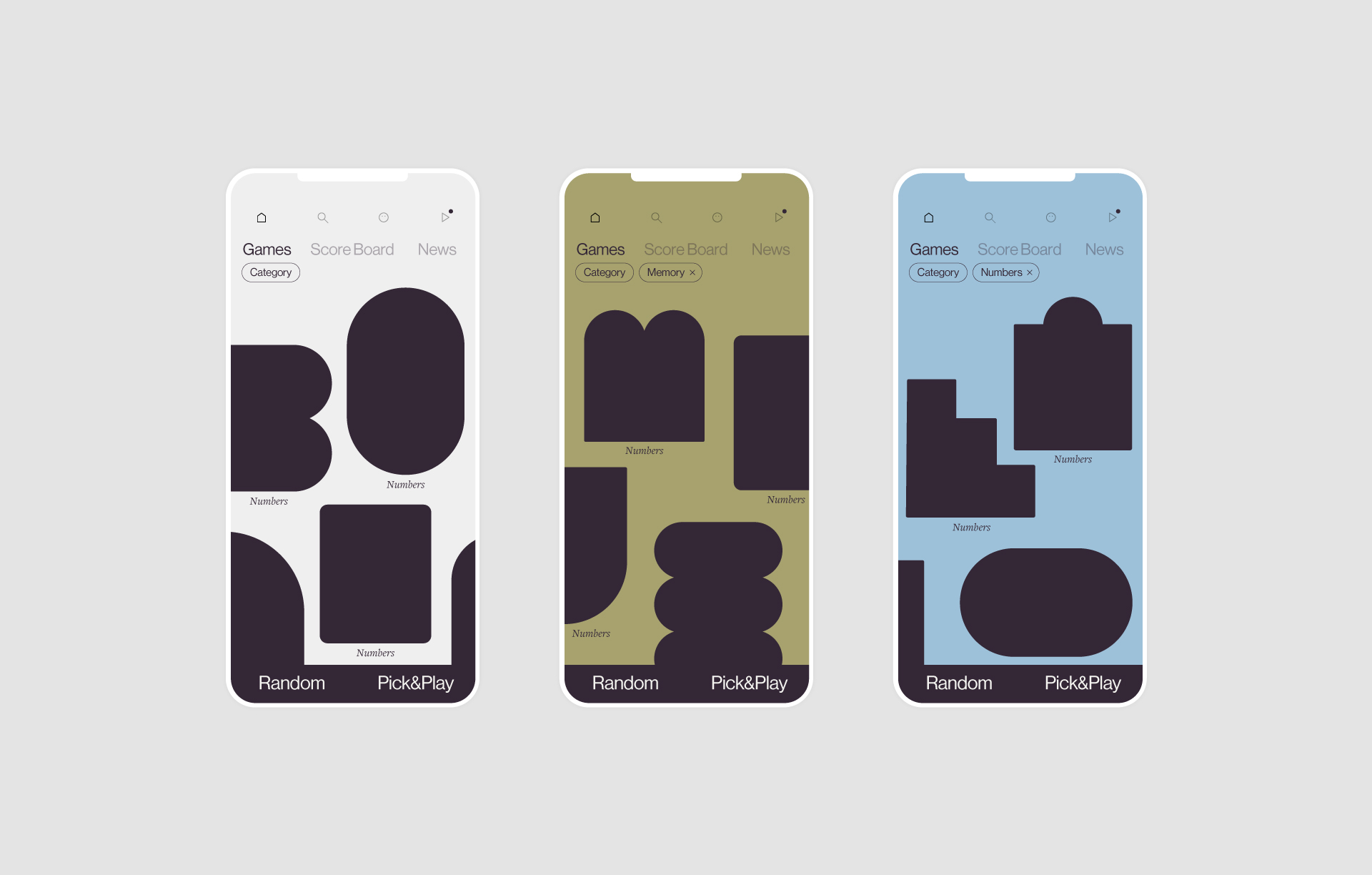
Daily Challenges — Sustaining Short-Term Motivation
Encourage frequent participation through structured variety.
Challenge types:
1____Social (1:1 challenge)
2____Time-based
3____Difficulty progression
Why
Daily challenges provide a clear reason to return, introducing urgency and novelty without requiring long sessions. Social and time-bound challenges further increase commitment and follow-through. [7, 11]
Benchmarks
Challenges introducing urgency or social interaction are associated with ~20–40% increases in participation frequency compared to open-ended activities. [7, 8]
Instant Success Messages — Reinforcing Effort
Strengthen emotional reward after activity.
Celebratory messages after game completion, level advancement, and challenge completion, with optional sharing.
Why
Immediate recognition reinforces the connection between effort and outcome. Emphasizing completion and participation, rather than only high performance, supports motivation across skill levels. [6, 10]
Benchmarks
Immediate positive feedback is associated with ~10–25% increases in short-term engagement and repeat behavior, particularly when recognition emphasizes effort and completion. [10, 12]
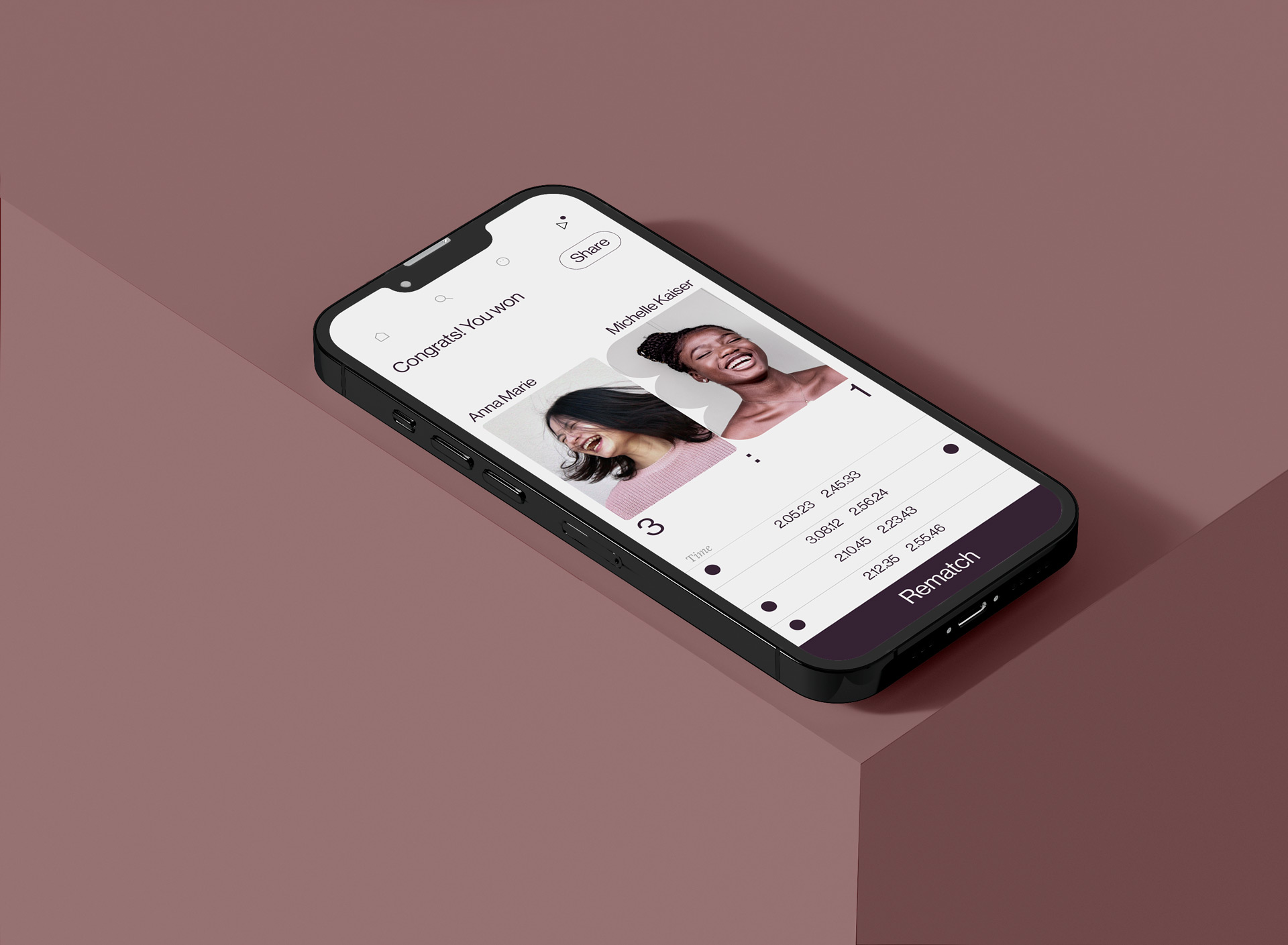
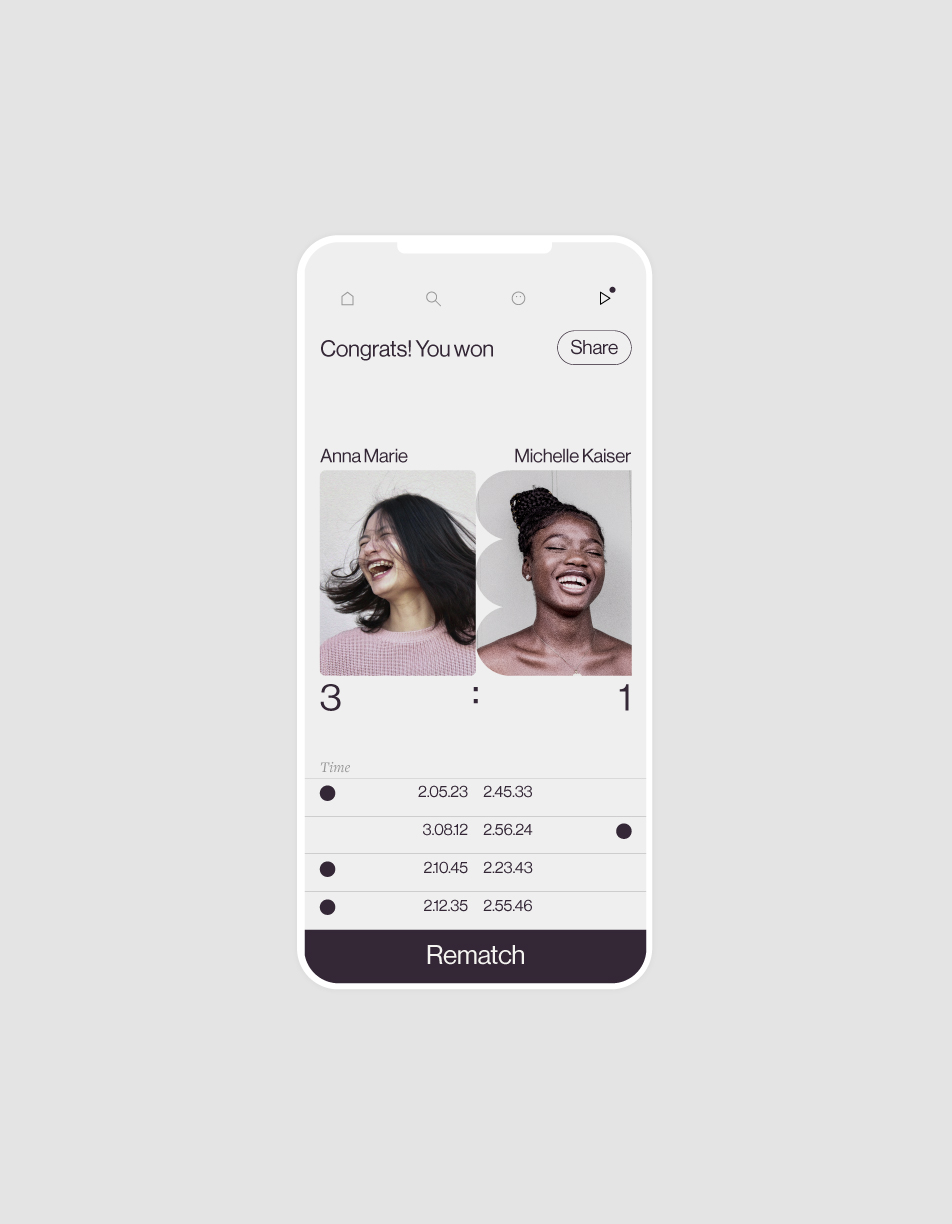
1:1 Matches — Structured Social Competition
Increase accountability through direct peer interaction.
1____Five games between two users.
2____Share(optional)
3____Instant Rematch option
Why
Direct competition introduces social obligation and visibility, increasing the likelihood that users return to complete ongoing matches. Structured formats prevent open-ended pressure. [8, 9]
Benchmarks
Structured peer competition increases engagement and persistence in learning contexts. [8]
Visual Design — Emotional Clarity and Approachability
Support learning by lowering emotional and cognitive barriers.
A colorful, illustration-driven interface with simple shapes, soft motion, and clear visual hierarchy. Visuals are used primarily to clarify states, progress, and transitions
Why
Cognitive training requires sustained mental effort. Emotionally positive, approachable visuals reduce perceived difficulty and anxiety, making users more willing to engage regularly.[4,12]
Benchmarks
1____Emotionally positive visual design reduces perceived difficulty and increases engagement in self-improvement applications. [4, 12]
2____Simplified visual language supports faster interpretation of system states and reduces cognitive load. [4]
Outcomes & Learnings
1____Consistency needs structure, not motivation
Short sessions, visible progress, and social prompts reduced reliance on motivation alone. Clear entry points and next actions were critical in helping users sustain regular cognitive training.
2____Lower early friction supports long-term use
Streamlined onboarding, immediate participation, and sensible defaults reduced cognitive load in early sessions and increased the likelihood of return.
3____Progress framing affects resilience
Highlighting cumulative effort and personal progress, rather than streak perfection, helped maintain engagement when usage was inconsistent.
4____Systems outperform isolated features
The most effective outcomes came from the interaction of progression, social challenges, feedback loops, and visual cues rather than optimizing individual mechanics.
5____Early experiences shape long-term behavior
Onboarding and first-use decisions had an outsized impact on return behavior and should be treated as core product surfaces.
References
1____Cepeda, N. J., Pashler, H., Vul, E., Wixted, J. T., & Rohrer, D. — Distributed Practice in Verbal Recall Tasks: A Review and Quantitative Synthesis, 2006
2____Cepeda, N. J., et al. — Distributed Practice in Verbal Recall Tasks, 2006
3____Bjork, R. A., & Bjork, E. L. — Making Things Hard on Yourself, 2011
4____Norman, D. A. — Emotional Design, 2004
5____Locke, E. A., & Latham, G. P. — Goal Setting Theory, 2002
6____Deci, E. L., & Ryan, R. M. — Intrinsic Motivation and Self-Determination in Human Behavior, 1985
7____Deterding, S., et al. — From Game Design Elements to Gamefulness, 2011
8____Bandura, A. — Social Learning Theory, 1977
9____Festinger, L. — A Theory of Social Comparison Processes, 1954
10____Csikszentmihalyi, M. — Flow: The Psychology of Optimal Experience, 1990
11____Kapp, K. M. — The Gamification of Learning and Instruction, 2012
12____Fogg, B. J. — Persuasive Technology, 2003
13____Hamari, J., Koivisto, J., & Sarsa, H. — Does Gamification Work?, 2014
14____Skinner, B. F. — Science and Human Behavior, 1953
15____Lockwood, P., & Kunda, Z. — Superstars and Me, 1997